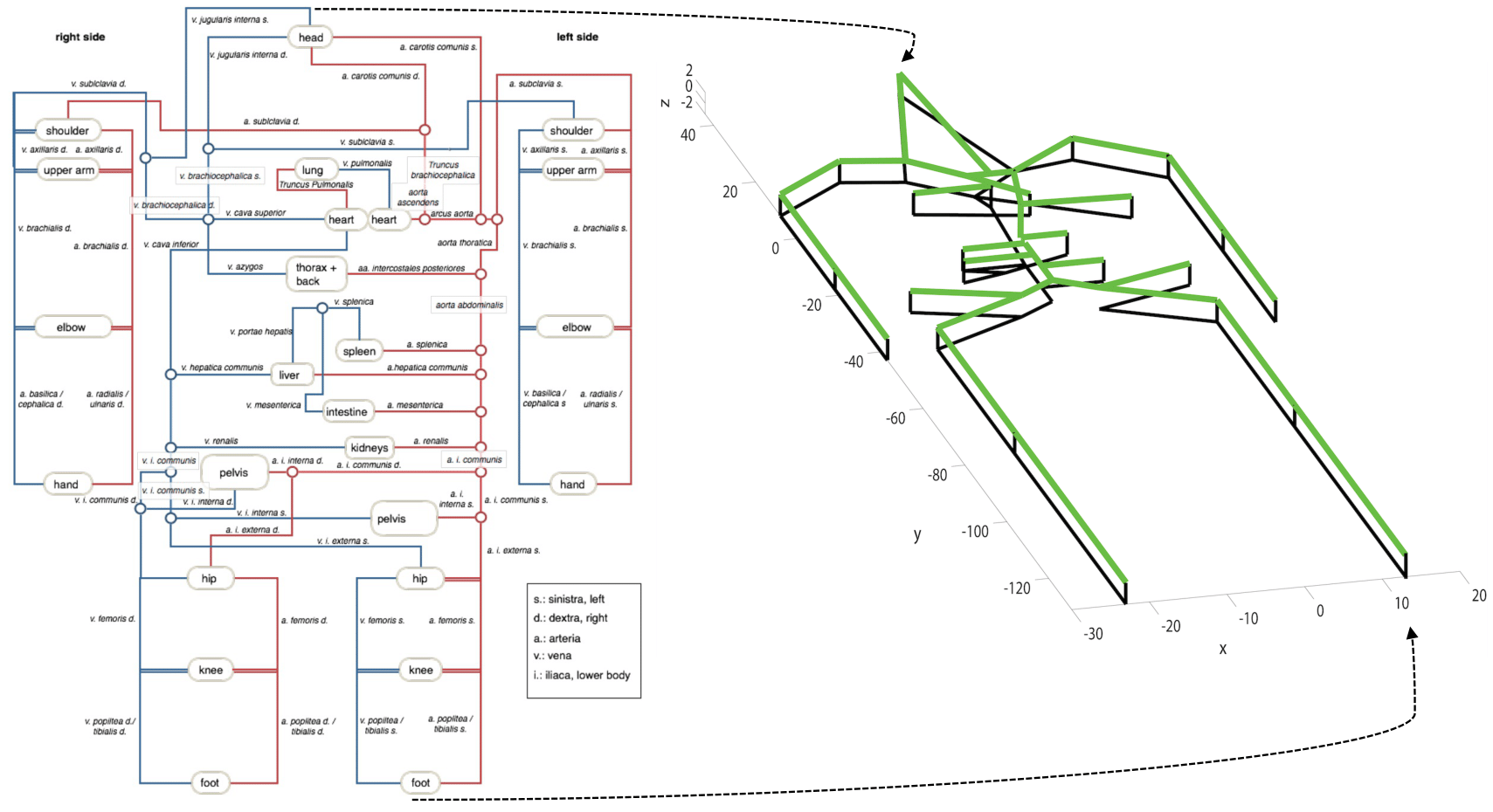
Challenge: Establishing objective benchmarking for revolutionary in-body nanotechnology
Nanoscale devices with Terahertz (THz) communication capabilities are envisioned to revolutionize precision medicine by being deployed within human bloodstreams. These microscopic devices, smaller than red blood cells, could enable fine-grained sensing applications for detecting biomarkers of various health conditions and targeted drug delivery for cancer treatment.
However, associating the locations of detected events with the events themselves presents unprecedented technical challenges. Flow-guided nanoscale localization—a new class of in-body localization—faces constraints including sub-centimeter THz communication range, energy-harvesting limitations, and high mobility of nanodevices in bloodstreams with speeds reaching 20 cm/s.
From decades of research on traditional indoor localization, we know that early-stage performance evaluation often suffers from incomplete metrics, inconsistent performance indicators, and different evaluation environments. To avoid such a 'lock-in' in flow-guided localization, there was an urgent need for standardized performance evaluation methodologies before the field matured.